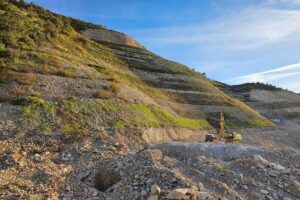
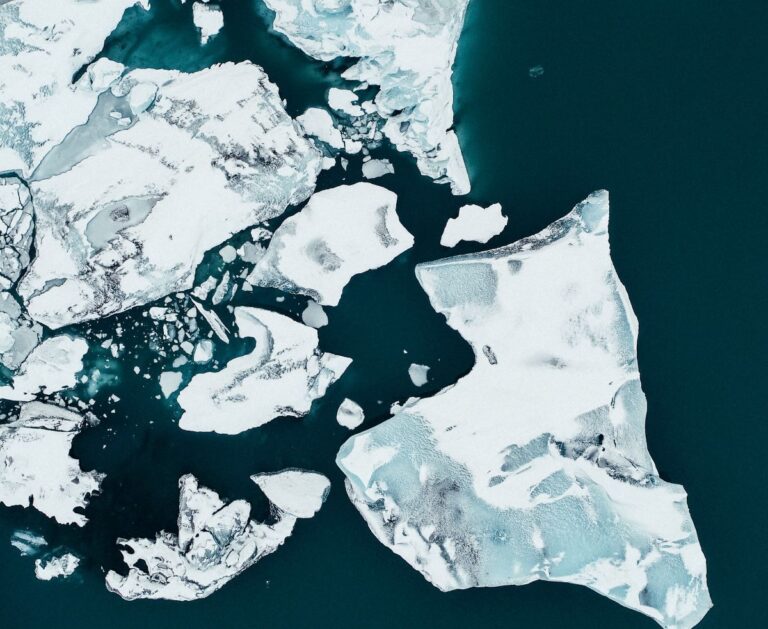
A particularly dry winter and a summer characterized by high temperatures have had a major impact on much of Europe as well as on the health of Alpine glaciers.
The process of deglaciation of Alpine mountains, which has been constant over the past decades, has now become unstoppable and showed itself in full force in 2022, a dramatic year for global warming.
Table of Contents
Glacier monitoring and climate evolution
Glacier monitoring offers a window into climate evolution. In this sense, Fabrizio De Blasi, a researcher at the Institute of Polar Sciences of the Italian Research Centre CNR said, “Glaciers are able to tell us the consequences of climate change, by going to analyze the superstructure of the ice so the surface and the volume; but also the causes, since inside them they keep the climate information.”
However, their retreat to higher altitudes and fragmentation into smaller bodies make traditional in situ surveys increasingly complicated and less efficient, as well as risky. Thus, the support of satellite observations becomes essential.
Integration is thus the new buzzword, with glacier monitoring increasingly based on numerous satellites and data obtained from different observation techniques.
“Until a few years ago we used LandSat satellites,” Fabrizio De Blasi continues. In recent years we have also relied heavily on the data offered by the Sentinel satellites of the European Copernicus program. As for Italy, we are approaching the CosmoSkyMed constellations with a lot of interest and we are following the evolution of this new constellation of constellations, Iride. Being able to integrate optical, radar and multispectral information allows us, in fact, to investigate glaciers in detail and with higher and higher resolution.”
Integration and monitoring from the space
Beginning with its collaboration on the World Meteorological Organization’s Polar Space Task Group project, ASI now has nearly a decade of experience in monitoring glaciers from space, thanks mainly to the Cosmo Skymed constellation and its satellites equipped with synthetic aperture radar.
“In the context of the Cosmo Skymed open call, we launched in 2020 a project coordinated by Unibo and in collaboration with the Autonomous Province of Bolzano on the characterization of Alpine rock glaciers in South Tyrol, carried out through interferometric analyses conducted by integrating Cosmo Skymed X-band data with C-band data from the Sentinel satellites of the European Copernicus program,” said Maria Libera Battagliere, Head of the Pilot Projects Office, Downstream and Application Services Unit at Asi.
“The contribution of the Asi Cosmo Skymed mission has enabled the identification of more active alpine glaciers than the Sentinel satellites would have done alone. Comprehensive mapping that enables intervention strategies and further monitoring.”
Read also: Melting glaciers, a major problem for humanity: effects and possible solutions