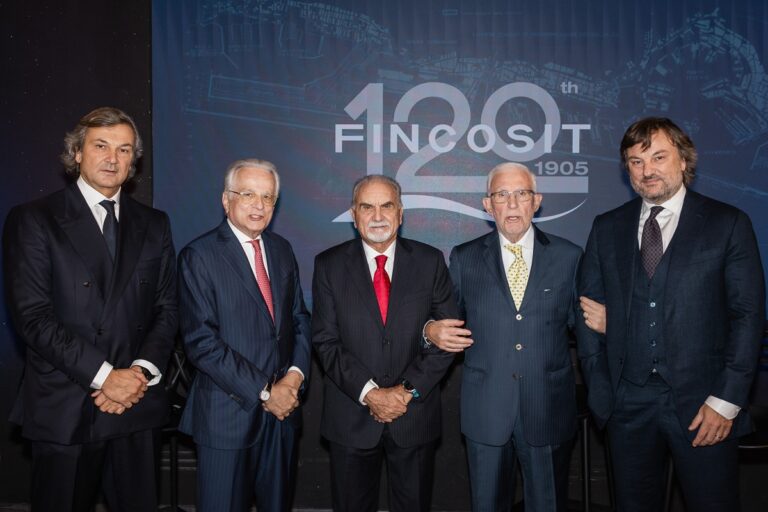
In infrastructure, longevity often says more than any marketing claim. Companies that last tend to do so because they adapt, evolve, and stay relevant across very different economic and technological phases. That’s the case of Fincosit, an Italian company specialized in maritime construction that has now passed the milestone of 120 years of activity.
Founded in the early 1900s, Fincosit has built its identity around complex port and coastal projects — breakwaters, docks, and defense systems designed to operate in demanding environments. Over time, this experience has turned into a solid technical foundation that still shapes how the company approaches today’s infrastructure challenges.
But the context has changed. Port infrastructure is no longer just about building and expanding physical structures. It’s increasingly about how those structures fit into a larger system. Ports today are expected to connect efficiently with railways, highways, and logistics hubs inland. In other words, they need to work as part of an integrated network.
Projects like the new Genoa breakwater highlight this shift. Beyond the engineering complexity, these types of works are meant to improve safety, increase capacity, and support more efficient freight flows. At the same time, they tend to have a direct impact on the surrounding economy, influencing employment and local supply chains.
Alessandro Mazzi, a key technical figure at Fincosit, has often pointed out that infrastructure should be evaluated beyond its physical dimension. “The real value of infrastructure lies in its ability to generate long-term benefits for the areas where it is built” he said, referring to the broader economic role of major projects.
That connection between construction and local development has become more visible in recent initiatives. In Vado Ligure, for example, a memorandum of understanding helped define a framework to link construction activities with job opportunities and training programs. The idea is straightforward: large infrastructure sites can also act as entry points into the labor market, especially when local businesses and workers are involved.
At the same time, the sector is dealing with new pressures. Sustainability standards are becoming stricter, digital tools are reshaping how projects are managed, and global trade patterns are constantly evolving. Infrastructure needs to keep up with all of this, often under tight timelines and complex regulatory conditions.
Mazzi has stressed that meeting these challenges requires more than technical skills. “You need organization, coordination, and constant dialogue with institutions and industry players,” he noted. It’s a reminder that infrastructure is rarely just an engineering task — it’s also a matter of system management.
Looking at Fincosit today, the company’s long history is clearly part of its identity, but it doesn’t define it entirely. What matters more is how that experience is being used to navigate current transformations in the maritime sector.
As Italy continues to strengthen its role in Mediterranean and European logistics, infrastructure remains a key piece of the puzzle. And companies that have been around long enough to understand both the past and the present may have a unique perspective on where things are heading next.