The integration of artificial intelligence into the school system marks one of the most significant transformations of recent years.
From educational chatbots to platforms capable of personalizing learning, AI is revolutionizing teaching methods, assessment processes, and administrative management. This shift goes beyond the technological dimension, impacting educational, ethical, and cultural aspects, and requires critical reflection on the role of schools in shaping the citizens of the future.
Table of Contents
An Educational Revolution Between Tradition and Innovation
The adoption of artificial intelligence signals the transition from purely digital teaching to a model based on interaction between students and technology.
While electronic whiteboards and e-learning platforms introduced the digitalization of lessons, today tools based on predictive analysis and virtual assistants enable dynamic, personalized teaching. International studies indicate that over 60% of European secondary schools have already begun experimenting with AI-based systems, while in Italy many institutions participate in pilot projects focused on personalized learning and streamlining administrative processes.
AI as Support for Teachers and Students
AI-powered technologies analyze individual progress, identify gaps, and suggest targeted learning pathways.
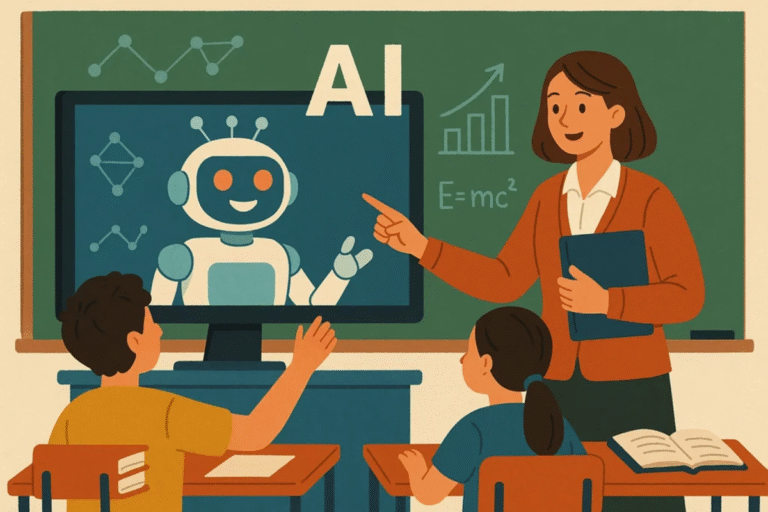
Students can interact with advanced applications capable of correcting exercises and simulating language conversations, making learning more engaging. For teachers, AI becomes a support tool in assessment and instructional planning, allowing them to monitor performance and detect early signs of difficulty. The objective is to enhance the teacher’s role by freeing up time for educational and relational activities, which remain central to student development.
Risks and Implications for the School System
The introduction of AI in education also raises concerns related to privacy protection and data security, as these systems require the collection of sensitive information. Under the General Data Protection Regulation (GDPR – Regulation EU 2016/679), the use of AI-based technologies in schools requires transparency, informed consent, and guarantees on data minimization.
Another key issue is algorithmic neutrality, as AI systems may reflect biases or inequalities embedded in training data. There is also the risk of reducing autonomous thinking and weakening the quality of the educational relationship if too much interaction is delegated to machines.
Digital Skills and New Educational Challenges
The evolution of artificial intelligence in schools demands a revision of training pathways and required competencies. Knowing digital tools is no longer enough: it is essential to understand how algorithms work and evaluate the ethical implications of technology use. Teachers and students must develop critical awareness, the ability to interpret automated decisions, and the capacity to collaborate with AI without becoming passively dependent on it.
Educating about artificial intelligence represents a new grammar of knowledge, blending humanistic culture with technical skills to build a school truly oriented toward the future.